
You spend hours researching a topic, draft a massive article, hit publish, and wait. A month later, your analytics dashboard shows zero organic visitors. You are frustrated because you did everything the experts recommended. The problem is that standard advice no longer works. The solution is writing for actual information gain and optimizing for an environment where users rarely click.
What makes a blog post rank today?
How to write a good blog post for SEO involves satisfying user search intent, formatting for readability, and providing unique information gain. You must structure content with clear headers, target specific keywords, and answer questions faster than your competitors to capture search engine traffic.
Here is the deal:
The search engine environment is hostile. We cannot just stuff phrases into a page and expect traffic. A 2024 study by SparkToro revealed that 59.7 percent of European Union Google searches and 58.5 percent of American Google searches result in zero clicks. Users get their answers directly from the results page. You are no longer competing just with other blogs. You are competing with the search engine itself.

Surviving the zero-click search environment
The zero-click environment is a reality we have to accept. Google uses AI Overviews to answer queries immediately. These generated summaries launched in 2024 and expanded widely, taking up 1,345 pixels of screen space when fully expanded. The first organic link gets pushed down to 1,686 pixels. Users have to scroll aggressively just to see traditional listings.
Why does this matter?
If you write generic definitions, Google will scrape your text and serve it without sending you a single visitor. You have to write content that forces a click. You do this by creating an information gap. Give the basic answer quickly in your text, but promise a deeper, proprietary insight that the AI cannot summarize effectively. We see this often with case studies. A bot can summarize what a case study is, but it cannot summarize your personal experience unless the user clicks through to read the nuance.
Finding the right keywords before you write
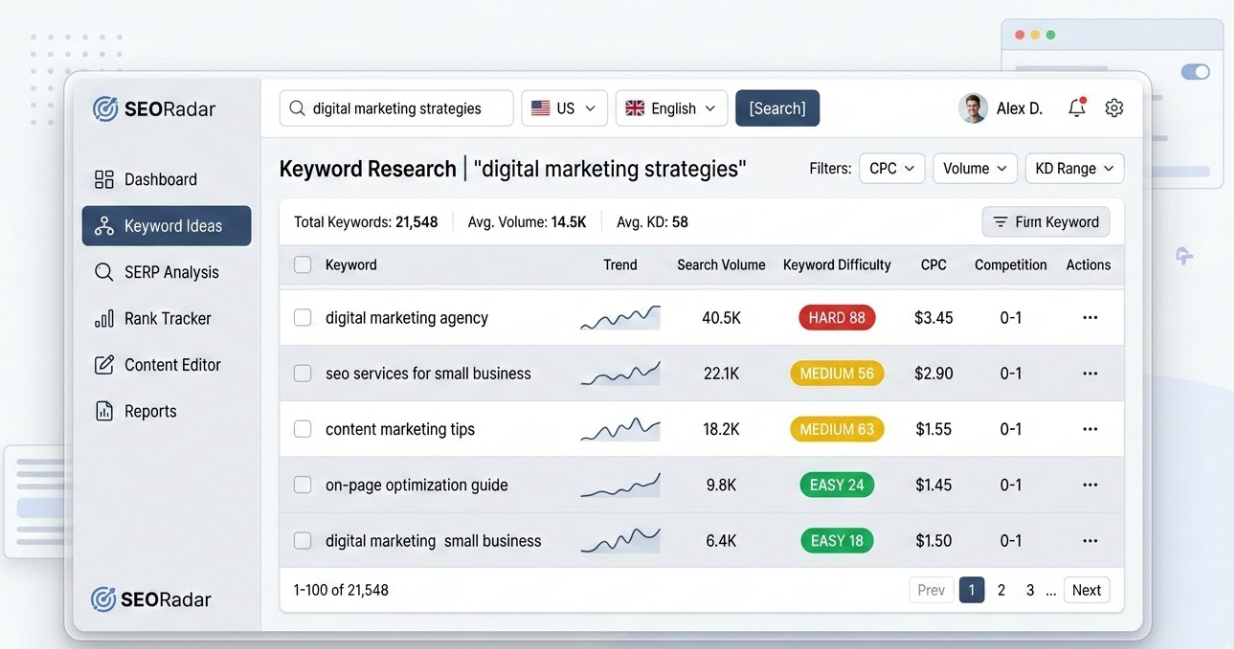
You cannot write an optimized post without data. Keyword research tells us exactly what users type into the search bar. We use tools to find phrases with high search volume and low competition.
The primary keyword is your main topic. The secondary keywords are related questions and subtopics. If your primary keyword is "best running shoes", your secondary keywords might be "running shoes for flat feet" or "how long do running shoes last".
We do not guess. We look at the data. We also look for long-tail keywords. These are specific phrases containing three or more words. They have lower search volume, but they convert at a higher rate. A user searching for "shoes" is browsing. A user searching for "men's trail running shoes size 10" is ready to buy. You want to target the long-tail phrases to capture highly motivated traffic.
The death of copycat content and Information Gain
How to write a good blog post for SEO requires understanding Information Gain. In 2022, Google approved a patent called Contextual Estimation of Link Information Gain. This patent changed how we evaluate content quality.
The concept is straightforward. Google looks at the articles a user has already read. If your post simply repeats the same points found in the top five results, your Information Gain score is zero. The search engine has no reason to rank your page. You have to introduce new variables. Copying the structure of ranking pages is a fast track to obscurity.
We can add information gain in a few distinct ways.
Interview an expert and quote them directly.
Run a poll on social media and publish the raw data.
Share a personal failure related to the topic.
Contradict a popular industry opinion with evidence.
I have published articles that broke standard formatting rules but ranked well because they contained original survey data. Users want fresh perspectives. Bots want unique entities to index. You have to provide both.
Proving your expertise with E-E-A-T
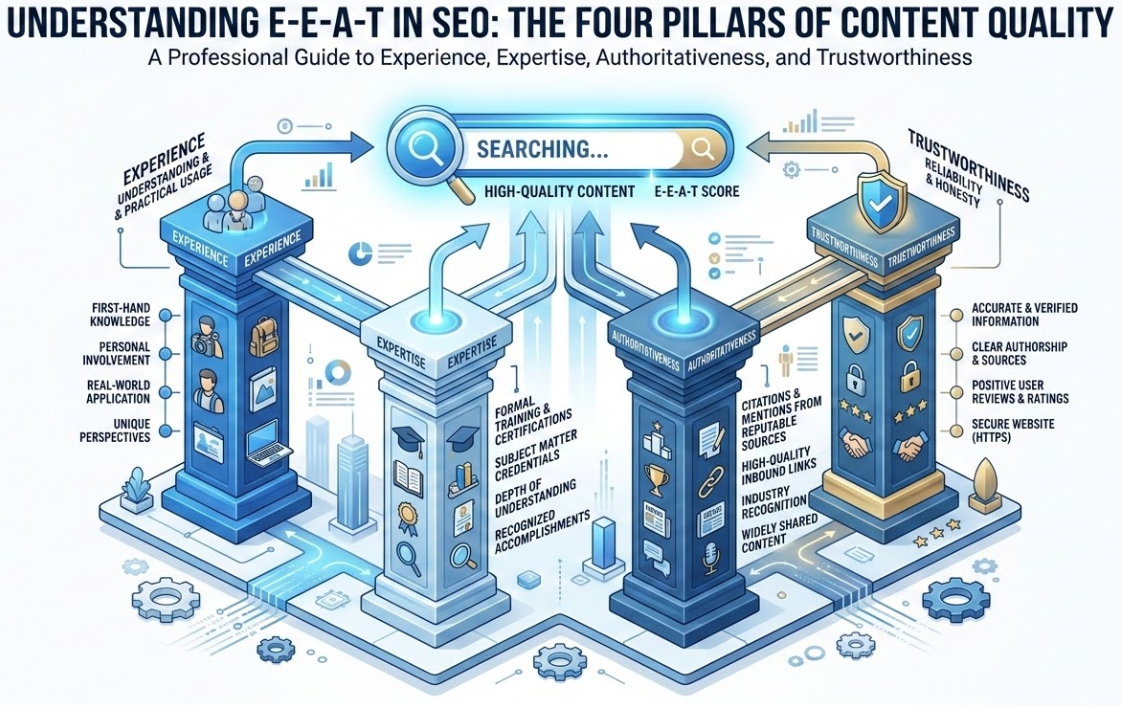
Google uses a framework called E-E-A-T to evaluate content. This stands for Experience, Expertise, Authoritativeness, and Trustworthiness. The algorithm wants to rank content written by real humans with actual experience.
We demonstrate experience by using first-person language and sharing specific details. If you write a review of a software tool, you must include original screenshots. You need to explain what you disliked about the tool. Anyone can copy a feature list from a sales page. Only a real user can explain that the dashboard lags when exporting large files.
Trustworthiness is the most critical factor. You build trust by citing reputable sources, displaying an author bio, and maintaining a secure website. If you write about health or finance, the standards are even higher. Google calls these "Your Money or Your Life" topics. You must have credentials to rank for these subjects.
Matching search intent with the right format
Your primary keyword dictates your format. If you target a phrase, you must analyze what currently ranks for that exact phrase. We call this mapping Search Intent.
There are four main types of intent. We usually focus on informational and commercial intent for blog articles.
Informational intent means the user wants to learn something.
Commercial intent means the user is comparing options before buying.
Navigational intent means the user is looking for a specific website.
Transactional intent means the user is ready to purchase right now.
If the top ten results for your keyword are listicles, you must write a listicle. If they are ultimate guides, you must write an ultimate guide. You cannot force a thought leadership essay into a results page that demands a step-by-step tutorial. The algorithm favors the format users click on most frequently.
The truth about ideal blog post length
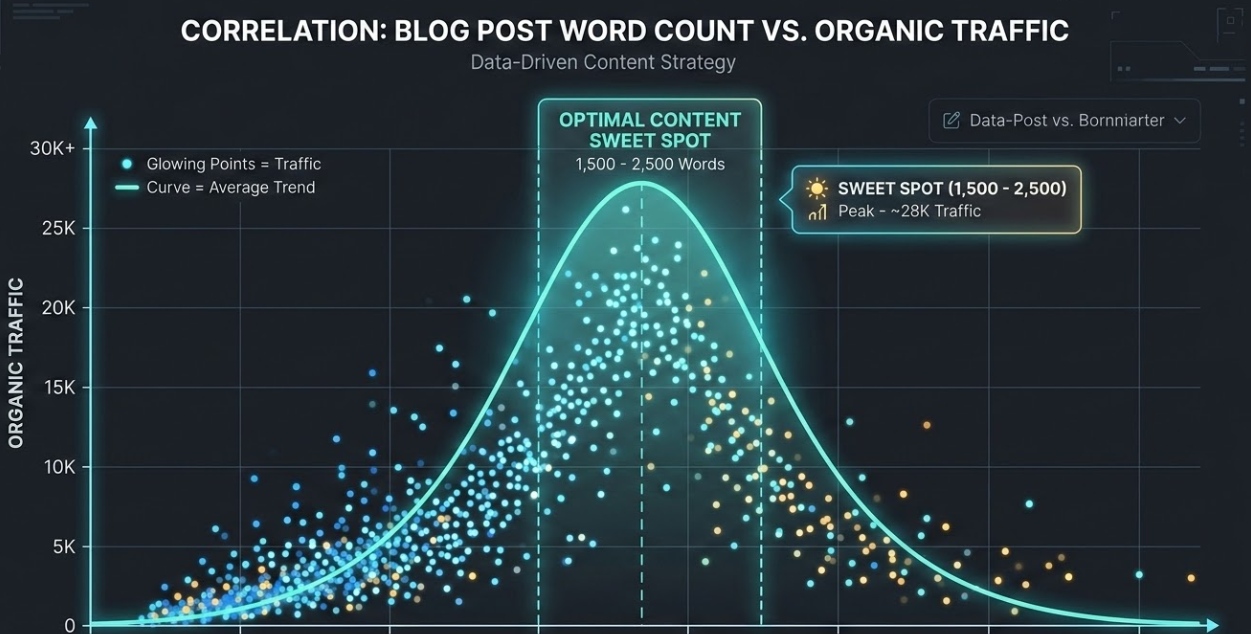
Blog post length is a controversial topic. Orbit Media reports that the average top-ranking post is around 1,400 words. A Semrush study found that top-performing articles average 1,152 words.
Here is the catch:
Word count is not a ranking factor. John Mueller from Google has stated this directly. A 3,000-word article filled with fluff will lose to a tight, 800-word article that answers the user's question perfectly.
You should let the topic dictate the length. An ultimate guide to machine learning requires 3,000 words. A guide on how to boil an egg requires 400 words. We aim for comprehensive coverage rather than an arbitrary word count. You win by being the last click a user makes. If they read your post and do not need to hit the back button, your length is perfect.
Keyword salience and entity optimization
How to write a good blog post for SEO demands proper Entity Salience. This means making your primary keyword the grammatical subject of your most important sentences.
Search engines use natural language processing to understand text. They look for the subject, verb, and object of a sentence. If your keyword is buried at the end of a long sentence, the bot assigns it less importance.
Look at this bad example. "In this comprehensive guide, we are going to teach you everything you need to know about how to write a good blog post for SEO."
Now look at this optimized example. "How to write a good blog post for SEO requires understanding search intent and entity salience."
The second version makes the keyword the active subject. We do this in the first paragraph, the first heading, and the conclusion. We also bold core entities. Entities are specific people, places, concepts, or things. If we write about SEO, core entities include backlinks, search intent, algorithm updates, and organic traffic. Bolding these terms helps human skimmers and provides strong signals to search crawlers.
Formatting for human readers and bots
Reading on a screen is difficult. Users do not read; they skim. If your article looks like a textbook, users will leave. High bounce rates signal to Google that your page is unhelpful.
We use specific formatting rules to keep people on the page.
Keep paragraphs under three sentences.
Use simple vocabulary that fits a Flesch-Kincaid Grade 8 reading level.
Insert a visual break every 400 words.
Use transition phrases to maintain momentum.
We call these transition phrases bucket brigades. They are short, conversational bridges that force the reader to look at the next line. You have seen them already in this post. Phrases like "Here is the deal:" or "Why does this matter?" break up the visual monotony. They keep the eye moving down the page.
You also need to use H2, H3, and H4 tags correctly. These tags create a document outline. Search engines read this outline to understand your subtopics. Never use a heading tag just to make text look big. Use them strictly for hierarchy.

Crafting headlines that drive clicks
Your title tag is your first impression. If nobody clicks, your rankings will drop. We need titles that generate curiosity without resorting to clickbait.
Front-loading the keyword is a standard best practice. Put your primary phrase as close to the beginning of the title as possible. "SEO Blog Posts: 10 Ways to Write Better Content" performs better than "10 Ways You Can Write Better SEO Blog Posts".
Add modifiers to the title to capture long-tail traffic. Words like "Guide", "Template", "Examples", or the current year help capture specific queries. A title like "How to Write a Good Blog Post for SEO (2026 Guide)" sets a clear expectation. The user knows the information is current.
Optimizing on-page SEO elements
Writing the body text is only half the job. We have to optimize the technical elements of the page before hitting publish.
The URL slug should be short and descriptive. Remove stop words like "and", "the", or "how to". If your title is "How to Write a Good Blog Post for SEO", your slug should simply be "write-good-blog-post-seo". Short URLs are easier to share and look cleaner in the search results.
Meta descriptions do not directly impact rankings. However, they heavily impact click-through rates. Treat your meta description like ad copy. State the problem, offer the solution, and include a call to action. Keep it under 155 characters so it does not get truncated on desktop screens.
Image optimization is another critical step. Search engines cannot see images. They rely on the file name and the alt text. Before you upload a photo, rename the file to describe the image. "woman-typing-laptop.jpg" is better than "IMG_4921.jpg". The alt text should describe the image accurately for visually impaired users while naturally incorporating related keywords.
The power of internal and external linking
Internal links connect your new blog post to your existing content. This builds topical authority. When you link to other posts on your domain, you help search engines crawl your site and understand the relationship between your pages.
External links are just as important. Linking out to authoritative sources shows that your content is well-researched. If you cite a statistic, link to the original study. We linked to the SparkToro study earlier in this post to verify our claims about zero-click searches. Google uses these outbound links to gauge the accuracy and neighborhood of your site. Never be afraid to link to a high-quality external resource.

Editing and auditing your draft
The first draft is never the final draft. We have to audit the text to ensure it aligns with our SEO goals and readability standards.
I read every post out loud before publishing. This highlights awkward phrasing and sentences that are too long. If you run out of breath reading a sentence, you need to add a period.
We also check for fluff. Remove phrases that do not add value. Change wordy sentences into direct commands. Simple writing is strong writing. Flesch-Kincaid Grade 8 is the target. You want your content to be accessible to the widest possible audience.
Finally, check the keyword density. We do not count exact keyword mentions anymore. Keyword stuffing will get your site penalized. Instead, we look for natural variations and related entities. If you write about SEO, you should naturally use terms like search volume, organic traffic, and ranking factors. If those terms are missing, the post lacks depth.
Fighting content decay over time
Publishing a post is the beginning of the process. Over time, your content will experience decay. Competitors will publish newer guides. Search intent will shift. Links will break. Your organic traffic will slowly decline.
We monitor our top pages every quarter. If a post drops from position two to position five, we intervene. We rewrite the introduction. We add new data points. We answer new questions that have appeared in the search results.
Updating an old post is often more effective than writing a new one. The URL already has authority. Google already knows what the page is about. By injecting new information gain, you signal to the algorithm that the page is alive and relevant.
Frequently Asked Questions
How long does it take for a blog post to rank?
It typically takes three to six months for a new blog post to reach its peak ranking. This timeline depends on the authority of your website, the competitiveness of the keyword, and the quality of your content.
How often should I update old blog posts?
You should audit and update your top-performing blog posts every six to twelve months. Refreshing outdated statistics, adding new information gain, and fixing broken links can significantly boost organic traffic.
Should I use tags and categories on my blog?
Categories group your content into broad topics, while tags act as an index for specific details. Use five to ten categories for your site structure. Avoid creating hundreds of tags, as this causes duplicate content issues.
Do I need an SEO plugin for my blog?
Yes. An SEO plugin helps you manage title tags, meta descriptions, and XML sitemaps without touching code. These tools provide a checklist to ensure you do not miss basic on-page optimization steps before publishing.